
Success Stories
Dealer Stories
Real Partners, Real Success
Hear from distribution partners who have built thriving businesses with A4L. Their stories could be your story.
From Behind the Scenes to Store Ownership
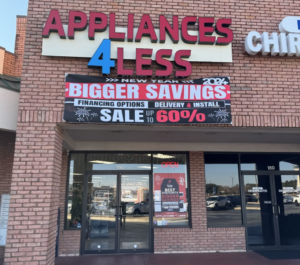


Zach didn’t enter the appliance business with prior industry experience or a large capital advantage.
His first exposure came from helping a close friend open an Appliances 4 Less store. By being involved early—during setup and day-to-day operations—he gained something most people don’t before starting a business: a clear view of how it actually works. That experience allowed him to evaluate the opportunity realistically, not emotionally.
At the time, Zach’s goals were straightforward. He wanted greater financial stability, the ability to plan for marriage and family, and a path that didn’t rely on constant uncertainty.
As he later shared:
“I wanted more financial freedom, get married, and work on a family. I thought if I could succeed with this store, it could bring me a step closer to my goals.”
After weighing the risks, he decided to open his own store—not as a leap of faith, but as a calculated decision.
Progress came gradually. What changed first wasn’t rapid growth, but a sense of control. Zach found himself directly responsible for how the business developed and how deeply it connected with the local community.
For him, the work goes beyond selling appliances. It’s about helping families access reliable products at a more reasonable cost. In some cases, he and his team have even donated appliances to those in need, strengthening trust within the community.
That trust is reflected in the results. The store is approaching its 5,000th customer—an indicator of steady demand, repeat business, and long-term local relationships.
Today, Appliances 4 Less Warner Robins has become a trusted appliance destination for families in the area.
Zach’s story isn’t about overnight success. It’s about seeing a business clearly, committing thoughtfully, and building momentum through consistent, real-world operations.
That’s why Appliances 4 Less continues to share dealer stories—offering a transparent look at what ownership looks like beyond the surface.
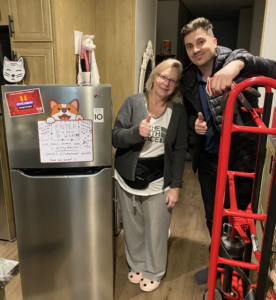

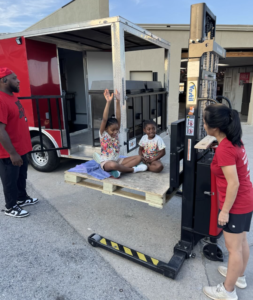

From Customer to Multi-Store Owner: Kai’s Path
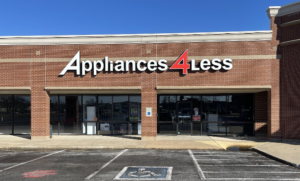


Before Kai ever owned an Appliances 4 Less store, he was already a customer.
As a real estate agent, he dealt with rentals, renovations, and property turnovers on a regular basis. Appliances weren’t an occasional purchase. They were part of the job. Over time, open-box appliances became the default choice—practical, cost-effective, and reliable enough for real use.
That experience shaped how he later viewed A4L. When he learned that store ownership was an option, it didn’t feel like entering a new industry. He already understood the products, the pricing, and what actually matters once an appliance is installed and in use.
So the decision wasn’t complicated.
It was familiar.
After opening his first store and getting operations into a steady rhythm, Kai continued to expand. Today, he operates five Appliances 4 Less locations.
What mattered to him wasn’t only the business model, but the people behind it. During the process, he felt aligned with the leadership and the values of the network. It made the work feel stable, grounded, and long-term—something worth building with, not just participating in.
Three years into operating stores, the part he’s most proud of isn’t a number. It’s the team.
Many employees came in without stable work experience. With the help of strong store managers, they learned on the job, gained confidence, and grew into their roles. Seeing people become more secure and genuinely happy at work has been one of the most meaningful outcomes of running the business.
On a personal level, store ownership changed Kai’s day-to-day life. Compared to his previous work, the pace became clearer and more manageable. He gained flexibility, could work remotely, travel more often, and still see a stronger income than before.
Time and income didn’t trade off.
They improved together.
The fifth store wasn’t part of a fixed expansion plan. It came naturally—after the model proved itself, the team stabilized, and the work fit into his life instead of competing with it.
Kai didn’t enter A4L chasing a new opportunity.
He entered because it was something he already trusted and used.
Today, Appliances 4 Less Oklahoma City is one of several locations he operates—each built on real demand, steady teams, and a sustainable pace.
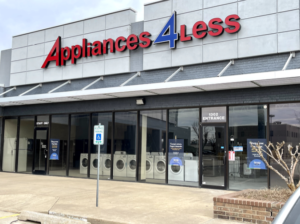


When Service Becomes a Business Decision
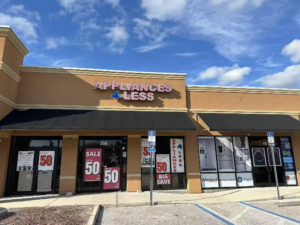


Appliances 4 Less stores operate on a simple model: move quality open-box appliances efficiently, price competitively, and serve local demand with speed.
Most days follow that structure.
In August 2024, one delivery in Jacksonville tested where policy ends and ownership begins.
Fiona and her husband Kobe opened their store in 2021. Neither came from the appliance industry. Kobe’s introduction to the business came through hands-on delivery work at an A4L store in New York. That experience shaped how they approached operations: understand the ground reality first, then scale.
On this particular day, a refrigerator delivery could not be completed. The customer’s home had no clear path for installation. The delivery company followed protocol and left the unit in the garage.
From an operational standpoint, the options were straightforward:
• Reschedule once access was cleared
• Process a return
Both would have been reasonable. Both protected efficiency. The customer, an 85-year-old woman with limited mobility, chose to cancel.
At that point, the situation shifted from logistics to judgment. Kobe made a decision that was not required by policy. He chose to return to the property and complete the installation personally. The work involved clearing space, moving furniture, removing doors, adjusting the appliance, reinstalling entry points, and relocating the old unit. The process took more than two hours.
This was not scalable behavior. It was not written into the delivery agreement. It did not improve short-term margin on that transaction. But it did something else.
It reinforced a positioning decision: that the store operates as a service-first local retailer rather than a transactional outlet.

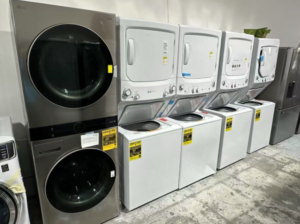

In community-based retail, especially in essential goods like appliances, long-term performance is influenced by more than price sensitivity. Repeat customers, referrals, and local reputation compound over time. Moments where ownership steps in personally create durable trust signals inside a defined geographic radius.
From a strict efficiency lens, the extra labor cost exceeded the immediate gain.
From a market positioning lens, it strengthened brand equity within the community.
This distinction matters.
Appliances 4 Less stores sell open-box appliances. Competitive pricing drives traffic. But retention and referral growth often depend on perceived reliability and accountability.
The Jacksonville location—Appliances 4 Less Jacksonville—continues to grow not because every delivery is extraordinary, but because customers understand that ownership is accessible and willing to step in when circumstances require discretion.
Not every situation calls for intervention beyond policy. But when it does, the decision belongs to the operator. That is where a store stops being a distribution point and becomes part of the local infrastructure.
For prospective operators evaluating the model, the takeaway is simple: Margins and systems matter. But long-term store performance is often shaped by how ownership handles edge cases. And edge cases, in community retail, are inevitable.
From Hourly Jobs to Store Owner/Creating Stability, One Step at a Time
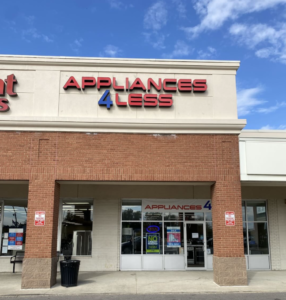


Here, we’re sharing Sue’s story.
Her path into store ownership didn’t start with a big entrepreneurial plan. It started the way many immigrant stories do—through years of working different jobs and trying to find something more sustainable.
After coming to the U.S., Sue worked wherever opportunity was available. She was a cashier at a grocery store. She packed orders in a warehouse. She helped in restaurants. She delivered food and packages.
These weren’t stepping stones toward a grand vision. They were practical decisions—ways to support herself and her family while gaining experience.
As a single mother and an only child, stability wasn’t optional. It was something she thought about constantly. She wasn’t looking for a shortcut. She was looking for a path that could gradually create something steady.
Her introduction to Appliances 4 Less came through a close friend. That friend’s family had already been operating stores successfully. What stood out to Sue wasn’t flashy growth or dramatic claims. It was consistency. The business looked structured. It looked repeatable. It looked like something that could be built over time.
Equally important was the support system behind it. For the first time, ownership didn’t feel like carrying everything alone.
Before opening her own store in 2022, Sue spent a full week training inside two established A4L locations. She observed daily operations, customer interactions, and the practical details that make a store function. By the time she launched, she wasn’t starting from zero. She had already seen how the model worked in real conditions.
During the early months, she also leaned on the broader network for marketing and operational guidance. Looking back, she often mentions how grateful she is to the people who helped her through those first stages.
Today, Appliances 4 Less Columbus represents more than a storefront to her.
It’s not about a dramatic transformation. It’s about direction. For the first time, the effort she puts in feels aligned with something that can grow. The work builds forward instead of starting over.
Sue’s story isn’t unusual—and that’s the point. Many people work hard for years without a clear long-term structure. What changes everything isn’t luck. It’s finding a model that allows steady progress

That’s why we continue sharing real dealer stories. Not to highlight overnight success, but to show what ownership looks like when it’s built step by step.
If you’re curious about what that path can look like, we’ll keep sharing.
Write Your Success Story
Join these successful partners and build your own thriving appliance business.